



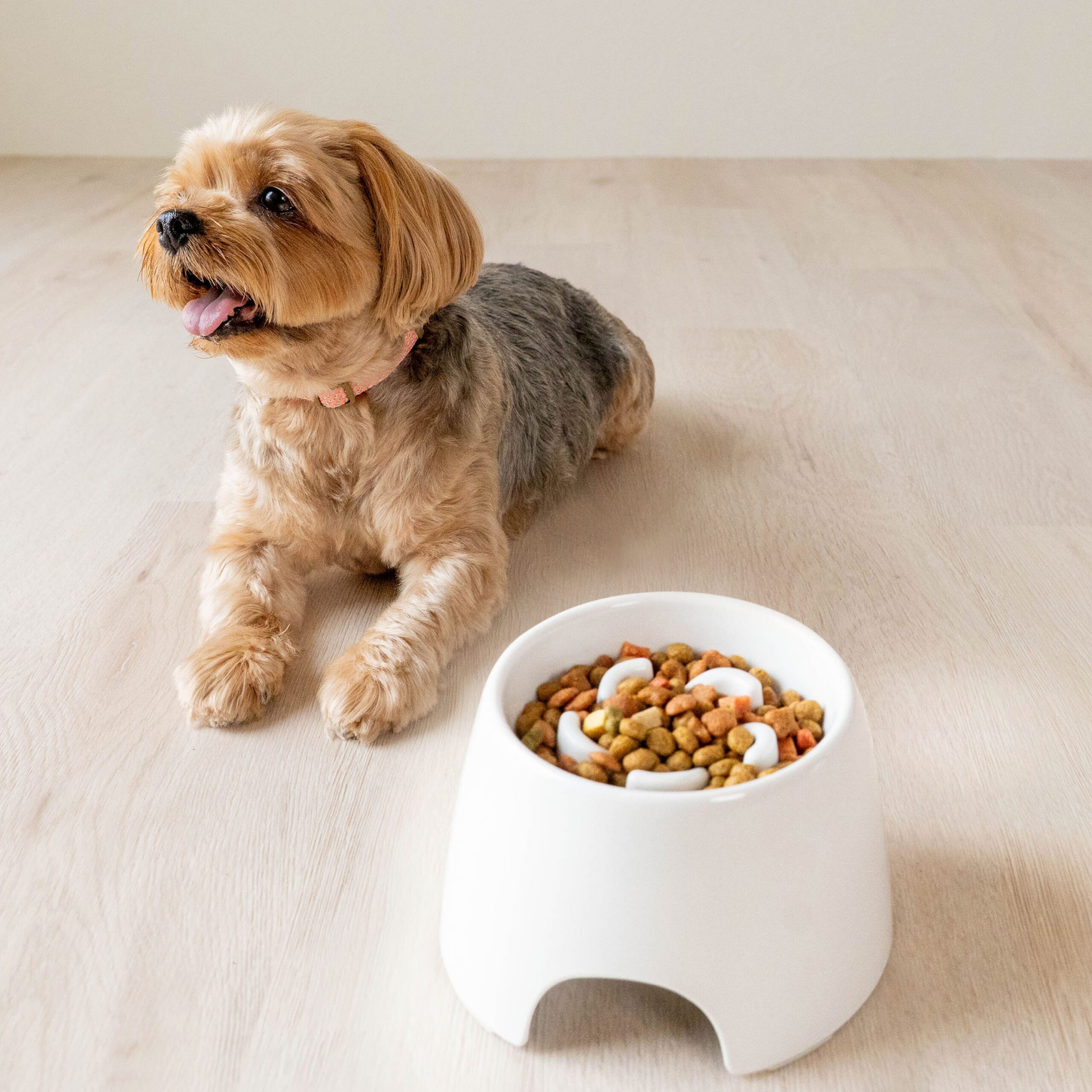
Preparing food for your pet may feel like your number one way to show them you love them. After all, when your companion looks you in the eye with those big brown puppy-dog eyes, or your geriatric cat greets you with a tap of the head at sunrise, it’s hard not to crack open that bag of kibble. Pouring too much food into your pet’s bowl may seem harmless, but it can add up to huge problems over time.
Every extra scoop of table scraps and the handfuls of kibble they beg for can lead to weight gain that will affect their longevity and quality of life. While making sure your pet eats food that they actually enjoy is one part of the equation, understanding how nutrition works and how to feed them precisely is every owner’s responsibility. Here we’ll walk you through the mechanical process of creating meals so you can leave guessing at the grocery store!
Believe it or not, pouring food into a plastic cup to measure is about the least accurate way to feed. Many studies have found that “eyeballing” a serving can lead to overfeeding by up to twenty percent. For your small breed dog, that extra food is equivalent to you eating an extra cheeseburger every day. This variance is because kibble sizes and densities are different brand to brand and sometimes bag to bag with the same brand and recipe. Portion control for dogs truly begins and ends with calorie management.
Did you know that excess weight alters an animal’s biology? Not only does carrying around extra weight make your animal move more slowly but carrying those extra pounds causes biological changes in your pet’s body chemistry that promote inflammation. When you measure food by weight rather than volume, you eliminate the guesswork and know precisely how much energy you’re giving your pet each day, preventing unwanted cat obesity or dog weight problems.
 |
 |
Animal physiology is sensitive. Carrying just two pounds too many on your cat is like YOU carrying an extra sixty pounds. Pet obesity is one of the most common causes for insulin resistance and feline type 2 diabetes, which requires intensive and expensive care twice a day for the rest of their lives. Not only does obesity cause secondary conditions, but when your cat has to carry that extra weight, it limits how much they want to move. Your pet avoids activity because it hurts to move those extra pounds.
The same can be said for your dog's health. Overweight dogs and dogs with predispositions to joint diseases like dysplasia feel the effects of too many calories pretty quickly. By properly managing your dog’s calories, you are effectively prolonging their “orthopedic age”. Think of it this way – You want your dog to have fun romping around with you while they’re still mobile well into their senior years.
There is no price low enough to put on accuracy, which is why we recommend grams over a cup measurement any day. Cups measure volume. Calories are a function of the weight of food. By cramming as many calories into that cup as physically possible, you may very well end up feeding your pet 120 grams of food. Fill that cup up with airy, fluffy kibble, and you may only be feeding 90 grams.
Digital kitchen scales are the gold standard when it comes to dog meal prep. Not only does it eliminate the variance of kibble shape and size, but it also removes your ability to make mistakes when eyeballing the portion. Place the empty bowl on the scale, push “tare” to zero out the weight of the bowl, and fill until the number matches whatever you need for that meal. This method of measuring pet food will ensure they get exactly what they need every day.
 |
 |
Inside the bag of food, you’ll find a feeding guide. These can be helpful, but they are very generalized to cover the widest range of animals possible. If you really want to tailor your pet’s diet, focus on the Guaranteed Analysis on the back of the bag.
Cheap foods contain tons of “filler” carbohydrates like corn gluten hulls or soy hulls. These provide a lot of energy but will make your animal crash after eating. Instead of remaining satisfied after a meal, your pet will feel hungry or even lethargic. A proper diet helps you accurately manage calories so you don’t experience the highs and lows of poor nutrition.
Kitten feeding schedules will look entirely different from your adult dog’s eating schedule. Kittens eat several small meals throughout the day because, while they have small stomachs, they have a LOT of energy! When they reach about 12 months of age, their metabolisms take a serious dip. Failing to decrease the amount you feed your kitten once they reach adulthood is a surefire way to cause obesity early on in their life.
Senior pets need calories restricted to minimize joint damage but high enough to maintain lean muscle mass. Regularly evaluating their Body Condition Score will allow you to make small changes to their dog meal prep before they gain too much weight.
 |
 |
Take our quiz to determine where your pet may be on the spectrum:
Your pet’s quality of life starts with taking care of the little things that keep them safe and happy.
Since 1960, Richell USA has had a passion for high-quality manufacturing. This heritage has allowed us to create products that fit into your lifestyle and support you in your daily routines.
Whether you’re a Practical Puppy Parent trying to figure out how to manage a kitten feeding schedule or a new parent who wants nothing but the safest products for their new pup, we have ergonomic and stylish products that will impress anyone who walks into your home. Our commitment to unparalleled quality means you don’t have to sacrifice style for function when you shop with Richell USA.
First, purchase a digital scale for measuring pet food. Secondly, create a dog meal prep routine and start measuring! If you cannot feel their ribs or they no longer have a visible waist, consult the feeding guide on their food and adjust their daily calories.
Cups, tablespoons, and eyedroppers are all incredibly inaccurate. When you pour by weight, you know exactly how many calories you’re feeding your pet. Better calorie management gives you the tools to reverse your pet’s obesity and keep them living longer without joint pain.
Split the daily amount into as many as 4 meals. Kitten meal plans should include small, frequent meals that are nutrient-dense. We recommend using a gram scale to accurately monitor their portions and prevent overfeeding during these growth years.
Please complete this form and click "Submit". Our Customer Support team will gladly address your request and respond in a timely manner.
Richell USA, Inc.

Copyright © Richell, Inc.. All rights reserved