



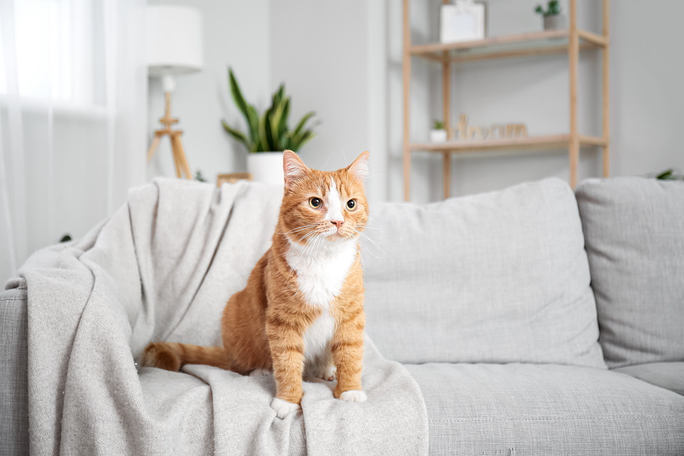
When we first bring a kitten into our homes, it’s an experience filled with pure joy. We’re instantly captivated by that tiny, purring ball of fur, so full of curiosity and playful energy. We set up their first, tiny cat bowl, we buy the smallest toys, and we take a thousand photos. In those initial moments, it’s hard to imagine that this eight-week-old creature will ever be anything but.
But as seasoned pet owners, we know the truth: they grow up in the blink of an eye.
That fragile kitten becomes a rambunctious "teenager," full of athletic prowess and a desire to conquer every bookshelf. Before we know it, that adult cat settles into a comfortable middle age, a master of the house with established routines. And then, one day, we notice a slight hesitation before they jump, a new preference for sleeping on the floor instead of the bed, and we realize we have a graceful senior on our hands.
A cat lives many "lives" under our roof, and each stage brings a new set of physical, mental, and instinctual needs. As their caretakers, our single greatest responsibility — beyond food and veterinary care — is to adapt our home environment to support them. A home designed for a kitten is not sufficient for an adult and can even be hazardous for a senior.
We believe that thoughtful product design is the key to this evolution. It’s not just about "cat-proofing" — it's about "cat-enriching," for every chapter of their life.
Today let’s walk through this incredible journey, phase by phase, showing how to create a supportive, enriching, and safe home for every one of your cat’s nine lives.
The kitten phase, typically from two to six months, is all about discovery. Their entire world is a brand-new adventure, and their brains are rapidly developing. Our primary goal during this time is to manage that boundless curiosity, create a safe environment for them to learn, and establish positive life-long habits.
When a kitten first arrives, the sheer scale of a full house or apartment can be overwhelming and dangerous. We always recommend starting them in a smaller "base camp" or safe room. This could be a guest bedroom, a home office, or a quiet laundry room. This room will contain their litter box, food, water, and bedding.
This is where a high-quality cat gate becomes the single most important tool in our arsenal. Many people associate pet gates with dogs, but they are an absolute necessity for kittens. A cat gate allows you to section off this safe room while still allowing the kitten to see, smell, and hear the rest of the household. This provides critical, passive socialization without overwhelming them.
More importantly, it’s a safety barrier. A cat gate prevents a tiny, uncoordinated kitten from:
When we designed our gates, we weren't just thinking about containment; we were thinking about integration. A walk-through cat gate allows us to move freely between rooms without having to remove the barrier, making our lives easier while keeping the kitten secure.
 |
 |
A kitten's first feeding station is a foundational part of their new life. But not all bowls are created equal. A kitten's tiny body and developing senses have specific requirements.
We must avoid a deep, narrow cat bowl that can cause "whisker fatigue." A cat's whiskers are incredibly sensitive receptors, and if they are constantly brushing against the sides of a deep bowl, it can cause sensory overload and stress, which may lead to them avoiding their food or water.
For a kitten, we recommend a shallow, wide cat bowl made from a non-porous material like stainless steel or ceramic. This allows them to access their food easily without their whiskers touching the sides. A non-slip base is also critical, as a "chasing" bowl that slides across the floor can be frustrating and even frightening for a small kitten.
And remember the golden rule of cat design: placement is everything. A cat’s instincts tell them not to eat near where they eliminate. We must place the cat bowl and water dish on the opposite side of the room from their litter box.
 |
 |
Even a tiny kitten has the powerful, ingrained instinct to climb and scratch. If we don't provide an appropriate outlet for this behavior from day one, they will find an inappropriate one—like the side of our brand-new sofa.
This is the time to introduce a starter cat condo. We’re not talking about a six-foot tower just yet. A small, stable cat condo with one or two levels and a built-in sisal scratching post is ideal. This single piece of furniture accomplishes three critical goals:
By placing a starter cat condo in their safe room or, later, in the main family room, we are sending a clear message: "This is your space. Your instincts are welcome here."
 |
 |
As our kitten matures into an adult cat (roughly one to seven years old), their needs shift dramatically. Their bodies are now fine-tuned athletic machines. The boundless, chaotic energy of kittenhood transforms into the focused, predatory energy of an adult. Our primary goals now are to manage this energy, prevent the boredom that leads to destructive behavior, and build a "vertical world" that satisfies their instincts.
The small starter condo has served its purpose. Now, it's time for the upgrade. For an adult indoor cat, a full-size, multi-level cat condo isn't a luxury; it's an absolute necessity.
We must remember that cats are territorial, and their territory isn't just measured in square footage—it's measured in cubic footage. An adult cat needs to survey its domain from a high vantage point. A tall cat condo becomes their "throne," "gym," and "lookout tower" all in one.
When we design a cat condo for an adult, we focus on stability and variety. A heavy, wide base is non-negotiable; if a cat feels even a slight wobble, they won't trust the structure. From there, it's about providing:
A well-placed cat condo is the centerpiece of an adult cat's enriching environment, a hub for play, rest, and observation.
Life with an adult cat often coincides with our busiest years. We have demanding jobs, social commitments, and may even travel for a weekend. This can create conflict with a cat's natural feeding schedule. Cats are grazers by nature; in the wild, they would eat 10-15 small meals throughout the day.
This is where a gravity feeder can be a game-changing tool for the right household. A gravity feeder holds a reservoir of dry food and automatically replenishes the bowl as the cat eats, providing a consistent, free-fed supply.
For a cat that is a natural "grazer" and does not overeat, a gravity feeder is the perfect solution. It eliminates "mealtime anxiety" — that desperate meowing at 5:00 AM — because the cat knows food is always available. It gives us, the owners, incredible flexibility. We don't have to race home from a late night at the office, worried that our cat is starving.
However, we must be responsible. A gravity feeder is only suitable for dry food and is not a good choice for a cat that overeats or needs strict portion control for medical reasons. But for the millions of busy households with self-regulating cats, it's an elegant solution that provides peace of mind for both pet and parent.
As we build out our cat's vertical world, we can get creative. A cat condo is the base, but how do we connect it to other high-value spots? With a cat ladder.
A cat ladder or a set of pet stairs acts as a bridge. We can use it to create a "sky highway" connecting their cat condo to the top of a bookshelf, or from a dresser to a high window perch. This expands their usable territory exponentially, allowing them to navigate the entire perimeter of a room without ever touching the floor. This is incredibly stimulating for an active adult cat, giving them new paths to explore and new vantage points to own.
The cat gate often gets put in storage after kittenhood, but it finds a new purpose in the adult years, especially in multi-pet homes. Its role shifts from kitten safety to adult resource management.
We can use a cat gate to create a "dog-free" sanctuary. By placing a gate in a hallway, we can give the cat an entire section of the house where they can eat, drink, and use the litter box without being disturbed by a curious or food-stealing dog. Many of our gates are designed with smaller pet doors built-in, allowing the cat to pass through while the dog cannot.
It's also a crucial tool for managing introductions, whether it's bringing home a new kitten or another adult cat. The cat gate allows for a slow, "see-but-no-touch" introduction process, which is critical for fostering a peaceful multi-cat household in the long run.
 |
 |
This final phase, beginning around ten to twelve years old, is perhaps the most meaningful. Our cats are now in their golden years. Our primary goal shifts from managing energy to preserving mobility and promoting comfort. Many senior cats develop arthritis, which makes the high-impact jumping of their adult years painful. Our home design must now become accessible, soft, and accommodating.
That favorite spot on the bed. The cozy armchair. The sunny window perch. These are not just habits; they are a senior cat's entire world. And one of the most heartbreaking moments we experience as pet owners is when we realize our cat can no longer reach them.
This is where the cat ladder or pet steps become the most compassionate and important piece of furniture we can own.
A cat ladder is a dignity-saving tool. It provides a stable, gentle incline that allows a senior cat to reach their cherished high places without the pain of jumping. We’ve heard from countless customers about the impact this single item has. One told us about their 14-year-old cat, Oliver, who had stopped sleeping on their bed. They were devastated, assuming he just wasn't interested anymore. After they placed a cat ladder at the foot of the bed, he was back with them, purring, that very same night.
We must be proactive. We should introduce a cat ladder at the first sign of hesitation, before they stop trying to jump. This simple addition tells our aging companion that their comfort is our priority and that they are still a part of the family's core spaces.
Just as jumping becomes painful, stooping can also be a challenge. Arthritis in the neck, spine, and shoulders can make eating from a floor-level bowl an uncomfortable experience.
We must now transition from a shallow cat bowl on the floor to an elevated cat bowl. A raised feeder, which holds the cat bowl at a more natural height, dramatically reduces strain on the neck and back. This promotes better posture, aids in digestion, and can make mealtime a far more comfortable and pleasant experience for a senior cat. It's a small change in design that provides an enormous quality-of-life improvement.
Our senior cat may not be scaling the 6-foot cat condo like they used to, but that doesn't mean they don't still want their own space. We may need to adapt.
If our current cat condo is very tall, we can place a cat ladder at the base to help them reach the first or second level, which is often their favorite napping spot. Alternatively, this may be the time to transition to a "senior-friendly" cat condo—one that is lower to the ground, wider, and features plush, orthopedic surfaces. Ramps, rather than steep jumps, are a key feature to look for.
Finally, the cat gate makes its third and final appearance. In the senior years, its role becomes one of protection.
A senior cat is more vulnerable. They can't escape a rambunctious new puppy or a visiting toddler as quickly as they used to. A cat gate can once again be used to create a peaceful, "retirement wing" of the house, where the senior cat can eat and sleep undisturbed.
It also serves as a safety barrier for them. A senior cat with declining vision or cognitive function might become disoriented and tumble down a steep flight of basement stairs. A cat gate at the top of the stairs is a simple, effective way to prevent a tragic accident and give us peace of mind.
From the first exploratory steps of a kitten to the gentle, measured movements of a senior, our cat's life is a journey. Our homes must be the stage that supports every act.
Designing our living space around our pets isn't a chore; it's an ongoing act of love. It’s how we communicate, in a language they understand, that they are safe, cherished, and welcome. That first tiny cat bowl eventually gives way to an elevated feeder. The small starter cat condo grows into a multi-level tower, and finally, it's joined by a cat ladder that helps an old friend get to their favorite spot.
At Richell US, we are honored to be a part of that journey with you. We thoughtfully design our products to be durable, beautiful, and—most importantly—adaptable to every single one of your cat's nine lives.
Are you ready to create the perfect, life-stage-appropriate environment for your feline companion?
Explore our complete collection of thoughtful pet solutions — from secure cat gates and enriching cat condos to accessible pet ladders. Find the perfect fit for your family's journey today.
While a cat ladder or pet steps can be used by an active adult cat to expand their vertical territory, they become a near-necessity for senior cats. We recommend introducing one around age 10-12, or at the very first sign you notice your cat hesitating before jumping onto furniture they used to access easily.
Yes, a high-quality cat gate is one of the most essential safety tools for a new kitten. It allows you to create a secure "base camp" or safe room, which prevents the kitten from accessing household dangers like stairs, electrical cords, or toxic plants. It also helps manage slow, safe introductions to other household pets.
The best cat condo has three main features: stability, variety, and appropriate materials. Look for a cat condo with a heavy, wide base to prevent tipping. It should offer multiple levels for climbing, enclosed "condo" spaces for hiding, and high perches for observing. Finally, it must have durable scratching surfaces, like sisal rope, to satisfy their scratching instincts.
A gravity feeder is an excellent choice for many households. It is perfect for cats that naturally "graze" or self-regulate their food intake, and it offers great convenience for busy owners by providing a consistent supply of dry food. However, we do not recommend a gravity feeder for cats that tend to overeat, are on a strict portion-controlled diet, or eat wet food.
Please complete this form and click "Submit". Our Customer Support team will gladly address your request and respond in a timely manner.
Richell USA, Inc.


Copyright © Richell, Inc.. All rights reserved